
Frequently Asked Questions
-
BubbleFect is cargo-agnostic and has been used across a wide range of cargo types including mRNA, CRISPR/RNP, plasmid DNA, proteins and peptides, ASOs, RNA/saRNA, siRNA, and small molecules. Researchers across our community are actively using BubbleFect with additional cargo types as part of their own workflows, and our validated application range continues to grow. If you don't see your cargo type listed, get in touch — we are happy to discuss your specific application at partitionbio.co.uk/contact-us.
-
BubbleFect has been used across a wide and growing range of cell types including hiPSCs, HEK293, HeLa, suspension cells (FreeStyle HEK), U2OS, mouse myotubes (post-mitotic muscle fibres), Jurkat, THP-1 monocytes, HepG2 and cancer cell lines including H1299 and HCT116. This represents only a snapshot — researchers across our community are actively using BubbleFect in many additional cell types as part of their own workflows, and our validated application range continues to expand. If you are working with a cell type not listed here, get in touch — we are happy to discuss your specific application at partitionbio.co.uk/contact-us.
-
In head-to-head comparisons, BubbleFect matches or exceeds competitor lipofection reagents for transfection efficiency while maintaining significantly higher cell viability — above 80% compared to dips post-transfection to approximately 20% with lipofection in suspension cells. Unlike electroporation, BubbleFect requires no specialist equipment, causes minimal cell stress, and maintains a simple three-step workflow. BubbleFect is also non-lipid and non-viral, removing the toxicity and complexity associated with both approaches.
-
BubbleFect is designed to preserve cell health. In suspension cells, viability remains above 80% throughout the experimental time course — compared to post-transfection dips to approximately 20% with competitor lipofection reagents. In cancer cell lines, cell survival exceeds 90% following protein delivery. BubbleFect's low cytotoxicity profile makes it particularly well suited to sensitive cell types where preserving viability is critical to experimental outcomes.
-
We don’t yet have data to comment on cargo delivery in vivo, however, we do have some early mouse data on tolerability - our delivery peptides that drive liquid droplet formation are disordered, and thus we think they will have the advantage of possibly being possibly non-immunogenic – preliminary early data supports this, but we need more work to bear this out. We are currently in the planning stages for further in vivo work. Indeed, our company’s long-term goal is to bring our liquid droplet technology platform into a therapeutic setting.
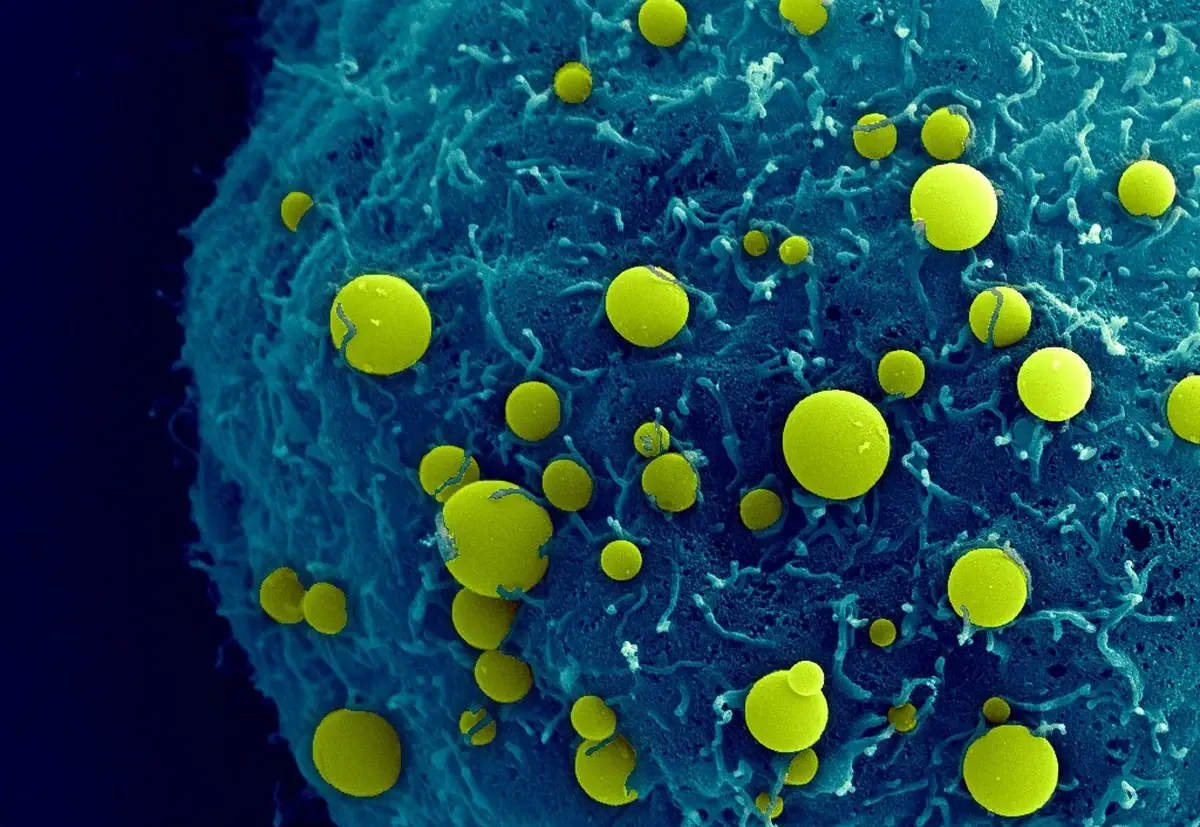
In the short-term, our focus has been on evangelising our novel non-viral delivery system by making it available as a research-use-only transfection reagent, in the form of BubbleFect. This represents one peptidefrom our patented library of synthetic polymers that can undergo phase separation and deliver biological cargos into cells. We hope that once you get a start with BubbleFect, you could potentially segue liquid droplets into an in vivo application in future, but this is still to be determined and optimised. For now, BubbleFect works really well as a transfection reagent that offers a lot more flexibility and better viability in the workflow than viral, lipid-based and electroporation workflows, but more significantly, offers the opportunity to deliver complex cargos like CRISPR RNP or larger assemblies at scale, due to the nature of the cooperative self-assembly of the droplets/Bubbles.
-
Very simple. BubbleFect uses a straightforward three-step protocol — mix, incubate, deliver — with no specialist equipment required. It is designed to integrate easily into existing workflows and is reproducible across users and laboratory conditions. Full protocol documentation is available on our downloads page.
-
BubbleFect is stable at room temperature, requires no cold chain, and can be shipped globally without dry ice or refrigeration. This makes it significantly easier to use than many lipid-based reagents, which are temperature sensitive and require careful handling. We recommend storing in the fridge or freezer upon receipt, for longer term stability and aseptic conditions.
-
Yes. BubbleFect is currently available for research use only (RUO) and is not approved for clinical or therapeutic use. PartitionBio is a life science tools company and BubbleFect is intended for laboratory research applications.
-
BubbleFect can be ordered directly at partitionbio.co.uk, or by contacting the team via email or the enquiry form on our contact page. If the cost of an initial purchase is a barrier to getting started, please get in touch and tell us about your research — we review applications on a case by case basis and may be able to support access where there is a strong scientific fit. Contact us at partitionbio.co.uk/contact-us.
-
Yes. Our scientific team is available to support you with protocol questions, troubleshooting, and application-specific advice. If you are working with a challenging cell type or cargo, we are happy to discuss your experiment before you get started. Get in touch via partitionbio.co.uk/contact-us.
A new phase in cell delivery
From